



This is changing for bicycles in Germany, Austria and Switzerland.
January 9, 2026
New regulations for cyclists, e-bike riders, and e-scooter riders will come into effect in 2026. While Switzerland isn't introducing any major changes, you can find the most important amendments from 2025 in our article "New Cycling Laws 2025. " In Austria, an amendment is expected to bring about changes ranging from helmet and turn signal requirements. German e-bike riders, on the other hand, can look forward to a practical simplification.
Bicycle Laws Germany 2025
The well-sounding Battery Law Implementation Act (BattDG) came into force in Germany on January 1, 2026. The major benefit lies in the disposal of e-bike batteries. While good batteries now last for 1,000 charging cycles or more, eventually they reach the end of their lifespan and must be disposed of. Thanks to the BattDG – which implements an EU regulation that, strictly speaking, has been in effect since August 2025 – consumers can easily return e-bike or e-scooter batteries.
- at recycling centers
- at bicycle retailers
- directly from manufacturers
- at special collection points
Manufacturers who sell via the internet must introduce suitable take-back systems so that consumers can easily dispose of the batteries.
New traffic rules in Austria
The 36th amendment to the Austrian Road Traffic Regulations is causing quite a stir. The changes affect:
- the classification of e-mopeds
- Permits for e-scooters
- a much-debated – comprehensive? – helmet requirement for e-bikes and e-scooters
E-mopeds off the bike path
E-mopeds, such as those popular with delivery services, are to be classified as motor vehicles . Not only will they then no longer be allowed to use cycle paths, but they will have to drive on the road; they will also be subject to licensing and insurance requirements , and riders will be required to wear a certified protective helmet.
New rules for riding e-scooters
The blood alcohol limit for e-scooter riders is to be lowered to 0.5 per mille. Currently, e-scooters (and e-bikes) can be driven with a maximum blood alcohol level of 0.8 per mille.
On the other hand, authorities will be able to more easily permit e-scooters – not just bicycles – to enter pedestrian zones in the future.
E-scooters must use turn signals
Furthermore, all e-scooters in Austria will be required to have turn signals as standard equipment from 2026. This regulation is also planned for Germany, but not until 2027. Specifically, the turn signal must be mounted on the handlebars. While this demonstrates the government's commitment to the value of turn signals on scooters and acknowledges the impracticality of hand signals on a scooter, the placement is utterly nonsensical.
- Lights on the handlebars are particularly susceptible to damage.
- The illuminated areas must be correspondingly small.
- The turn signal is obscured from behind by the driver.
- Operating it via push buttons is an unnecessary distraction.
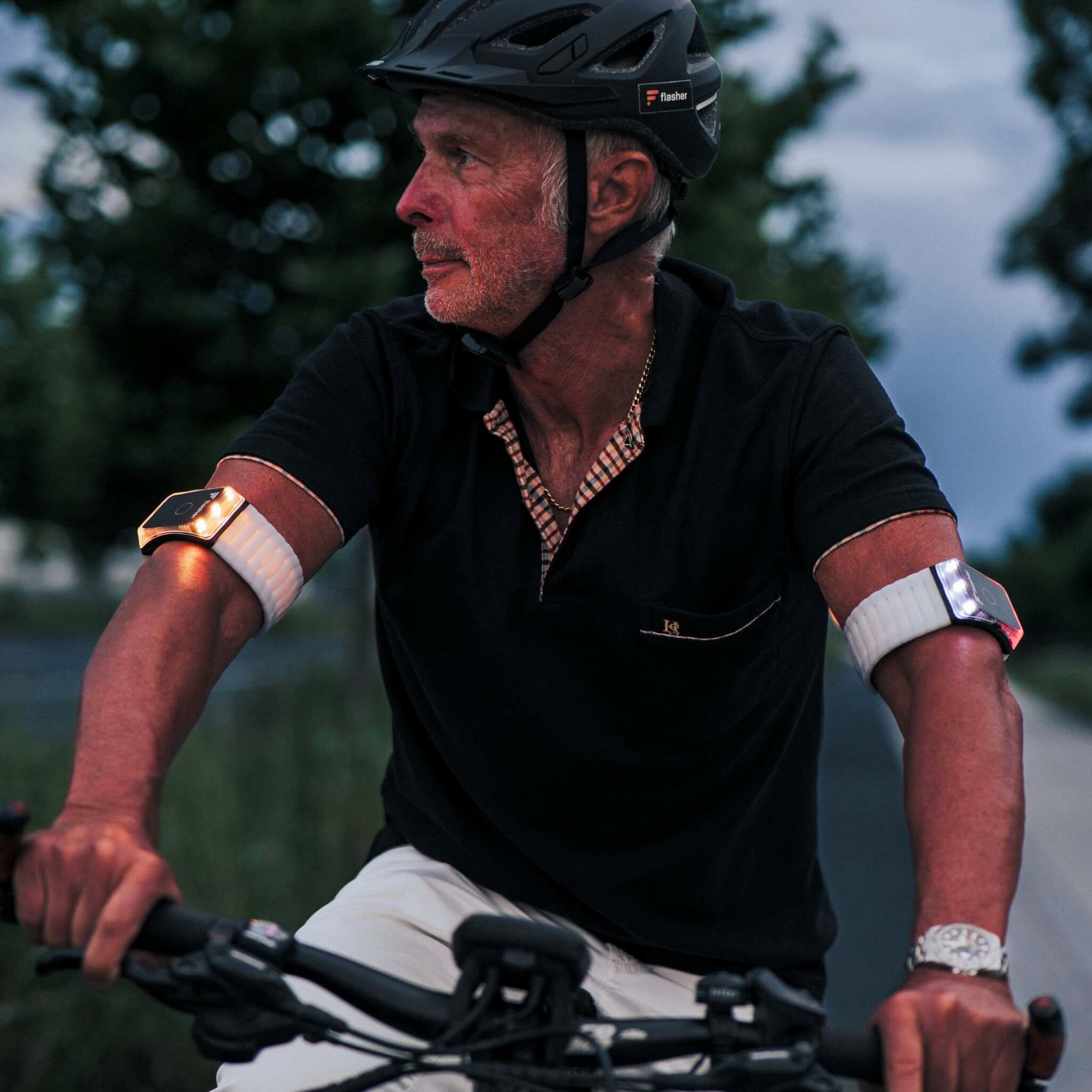
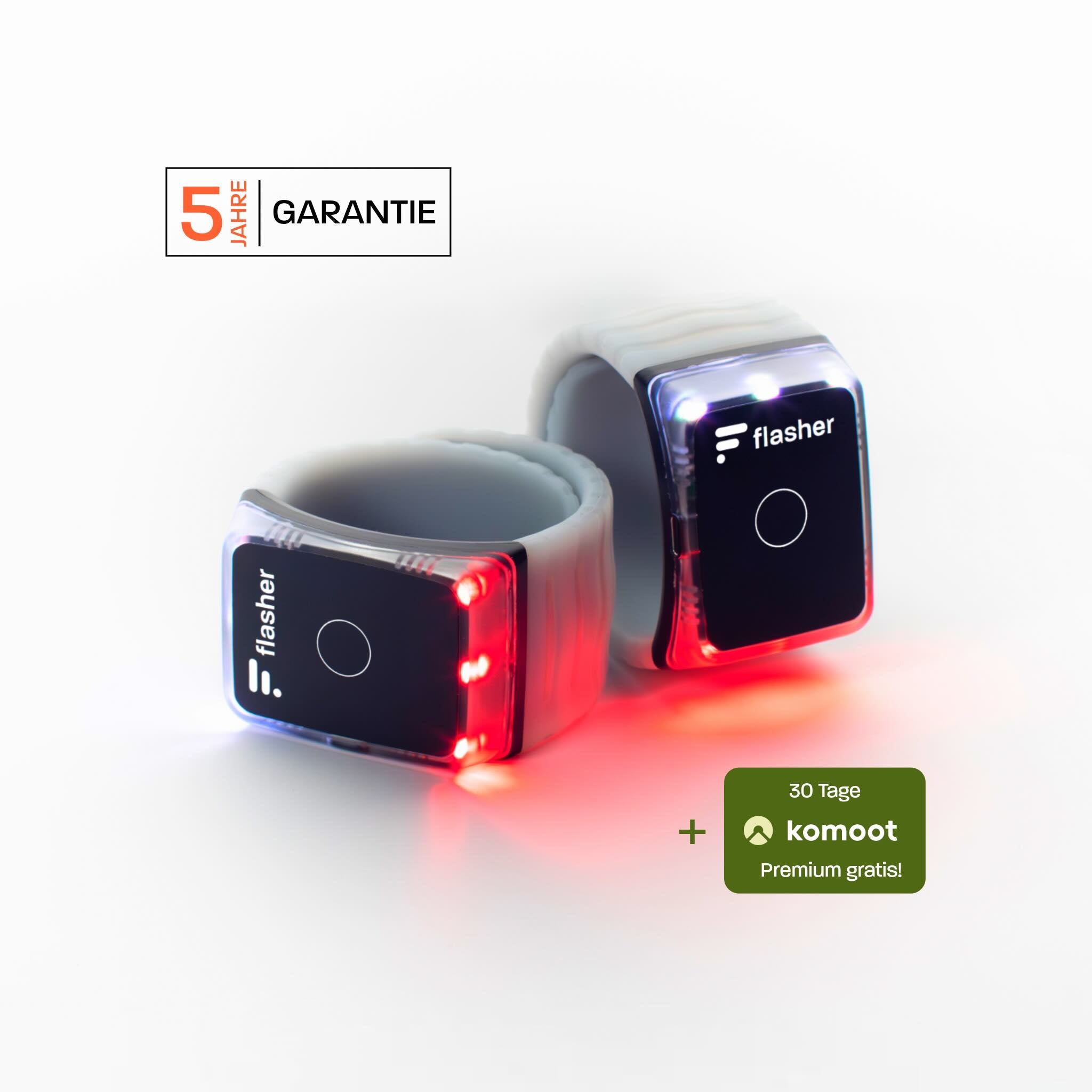
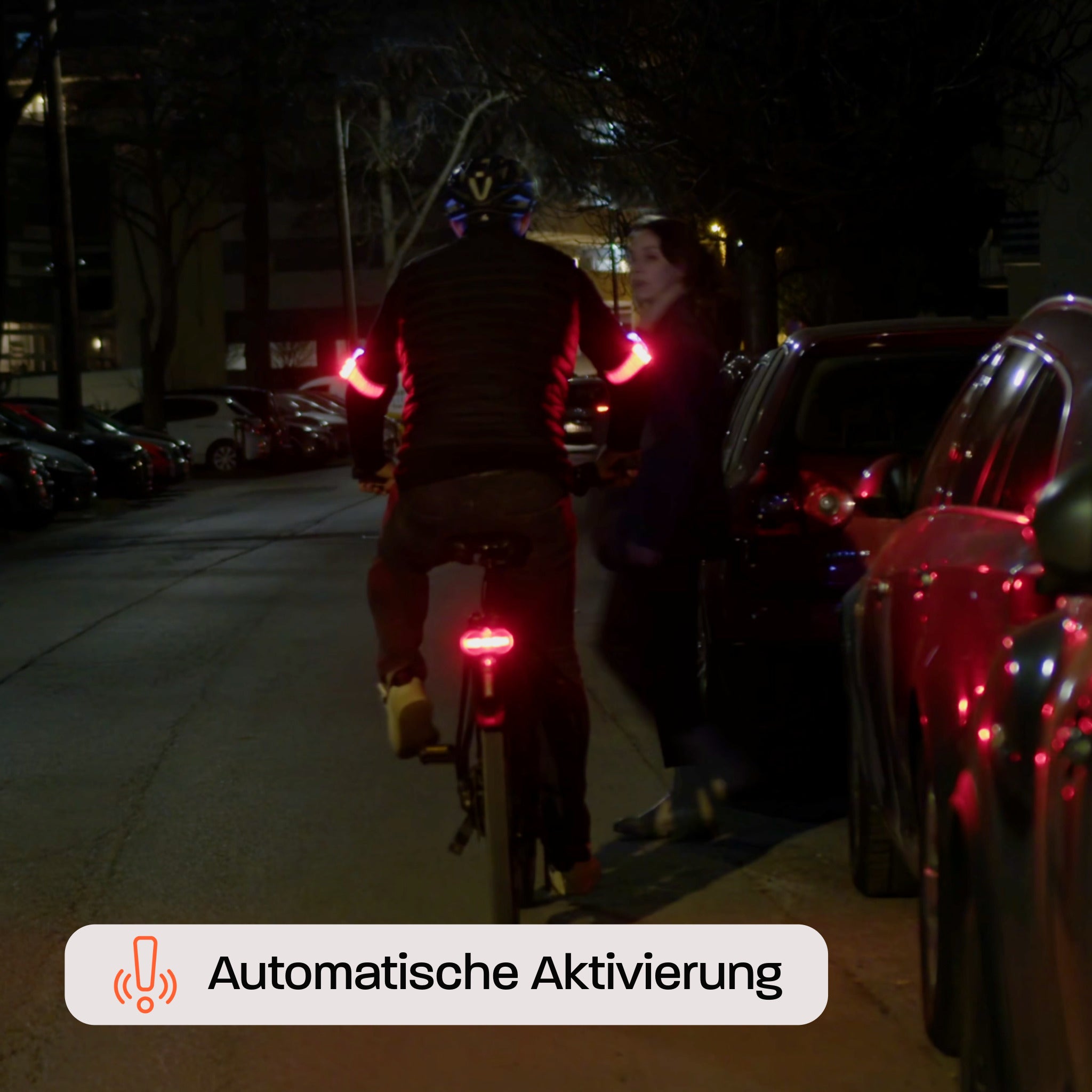
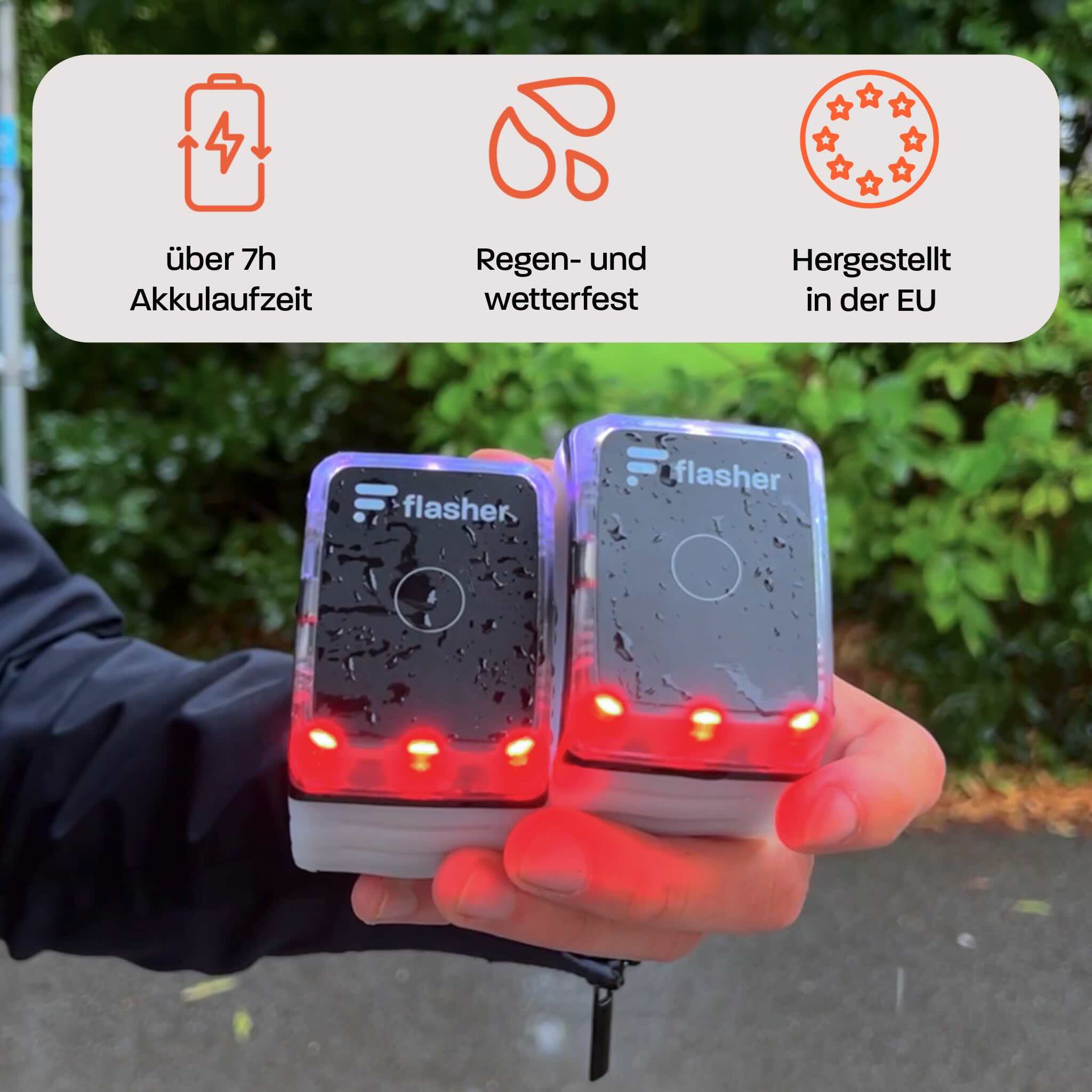
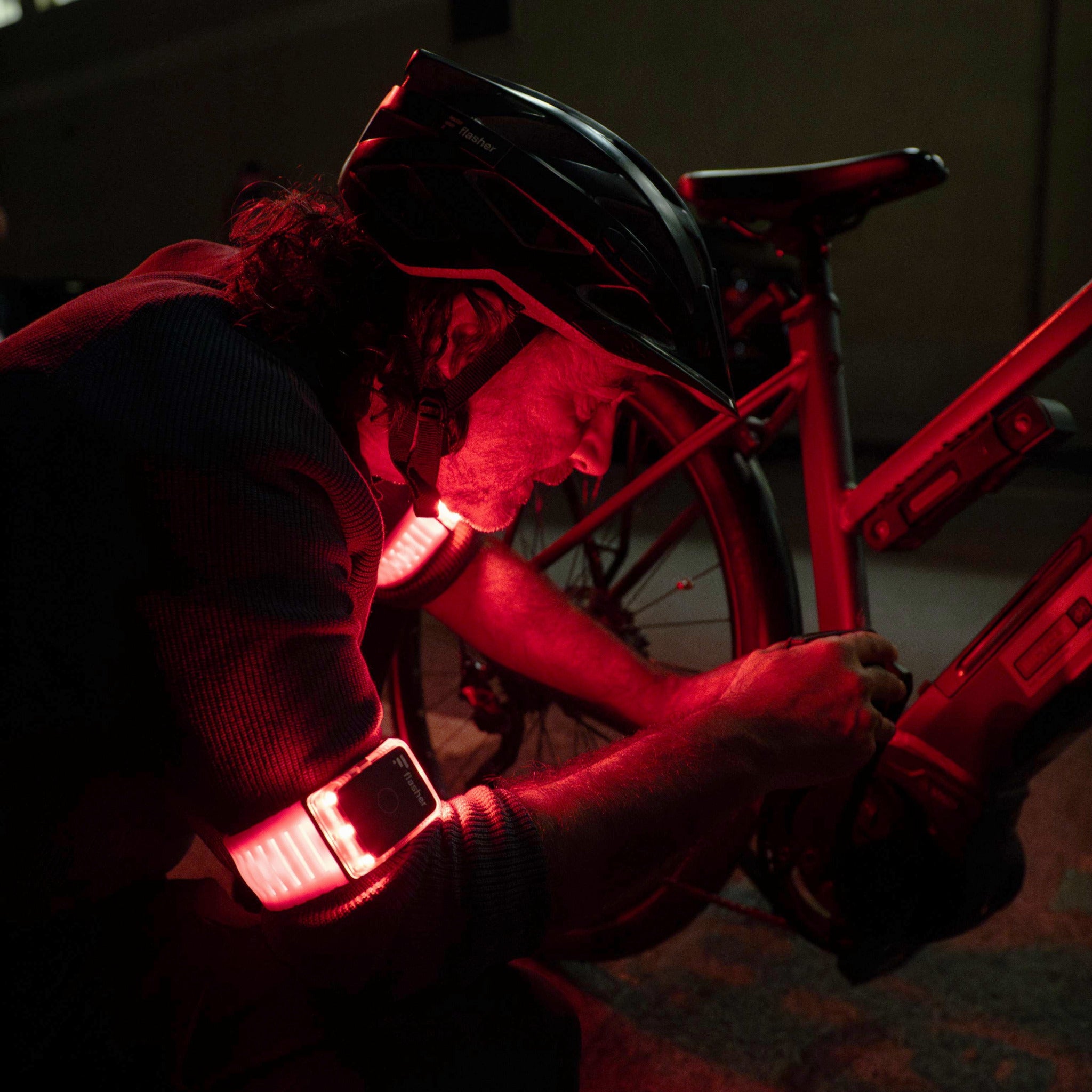
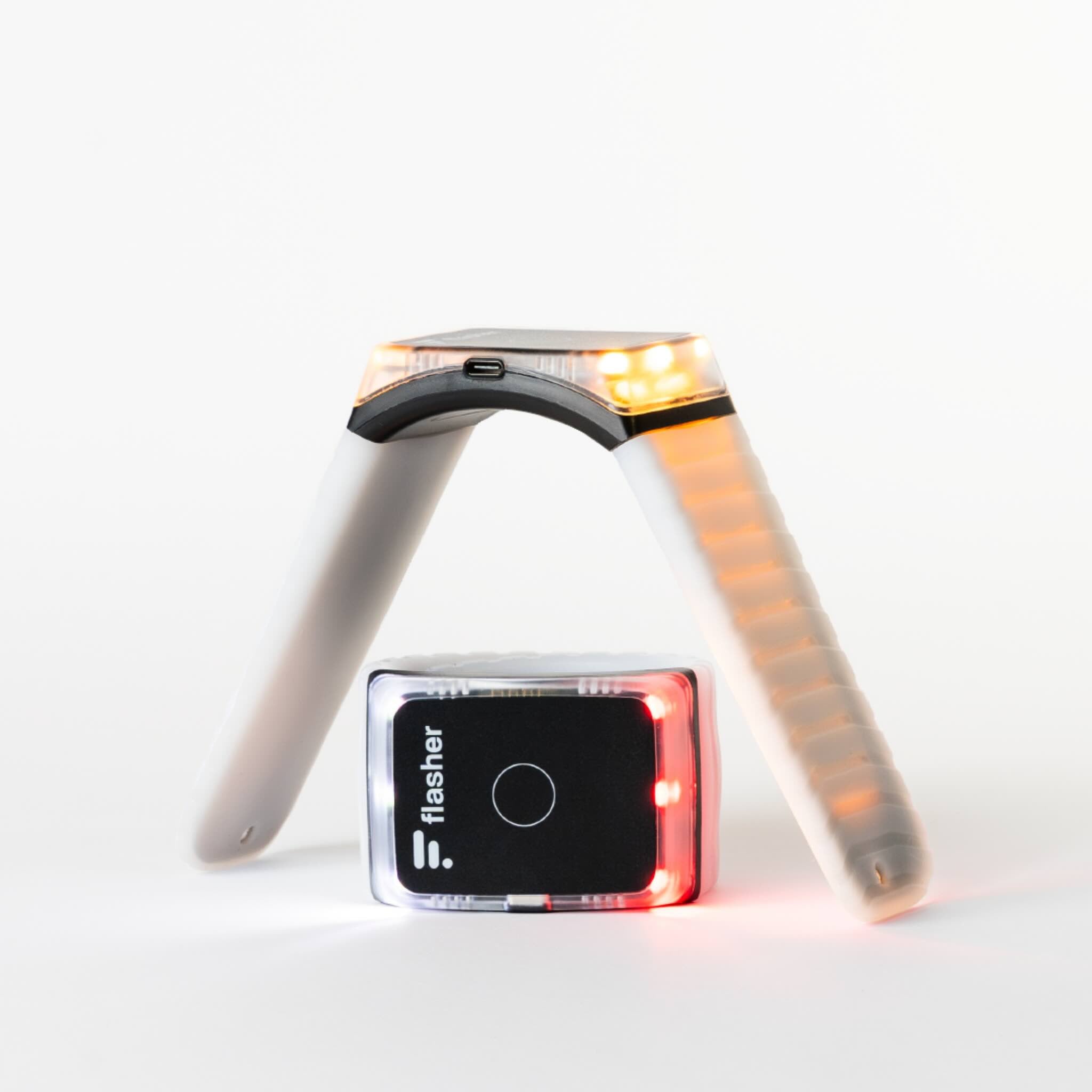
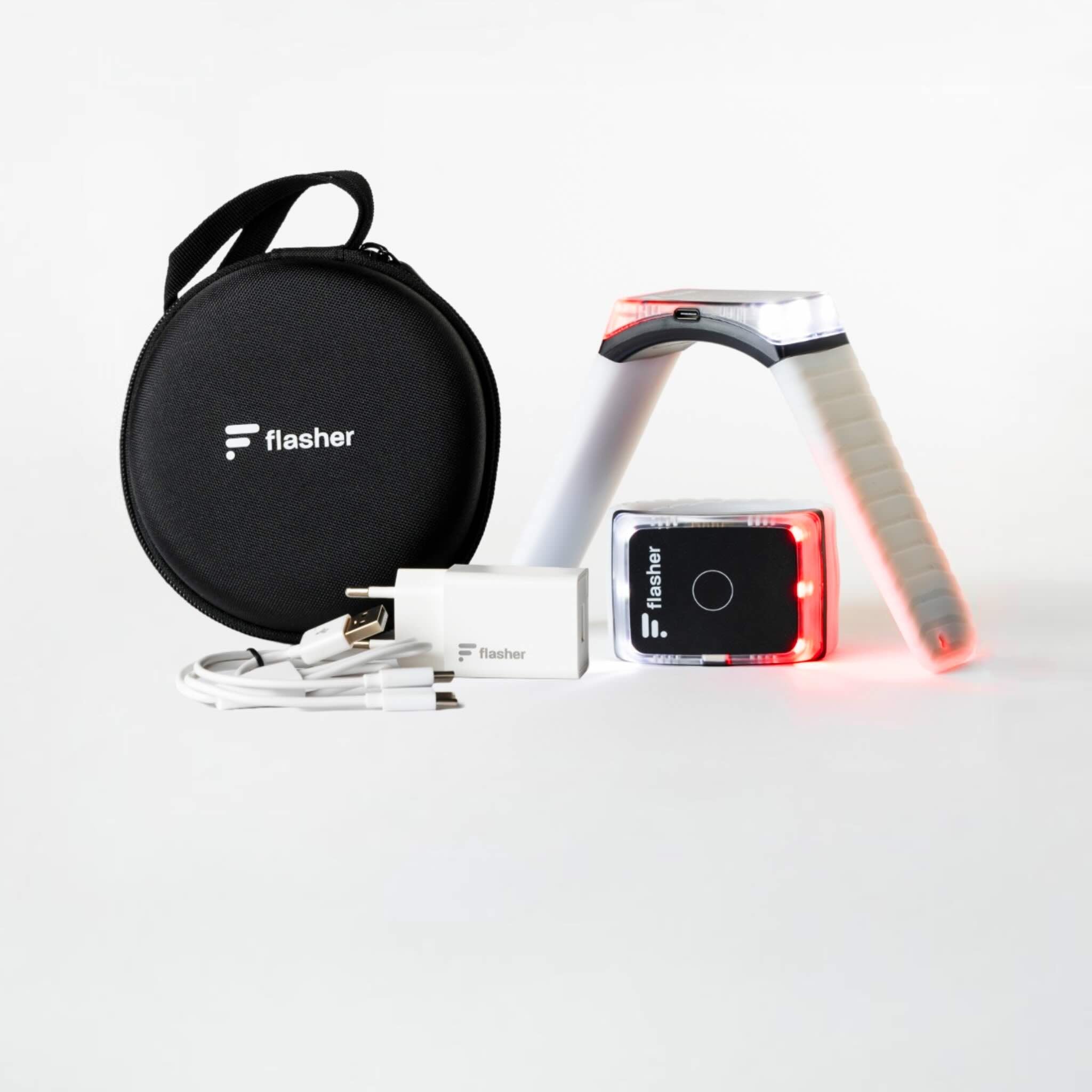
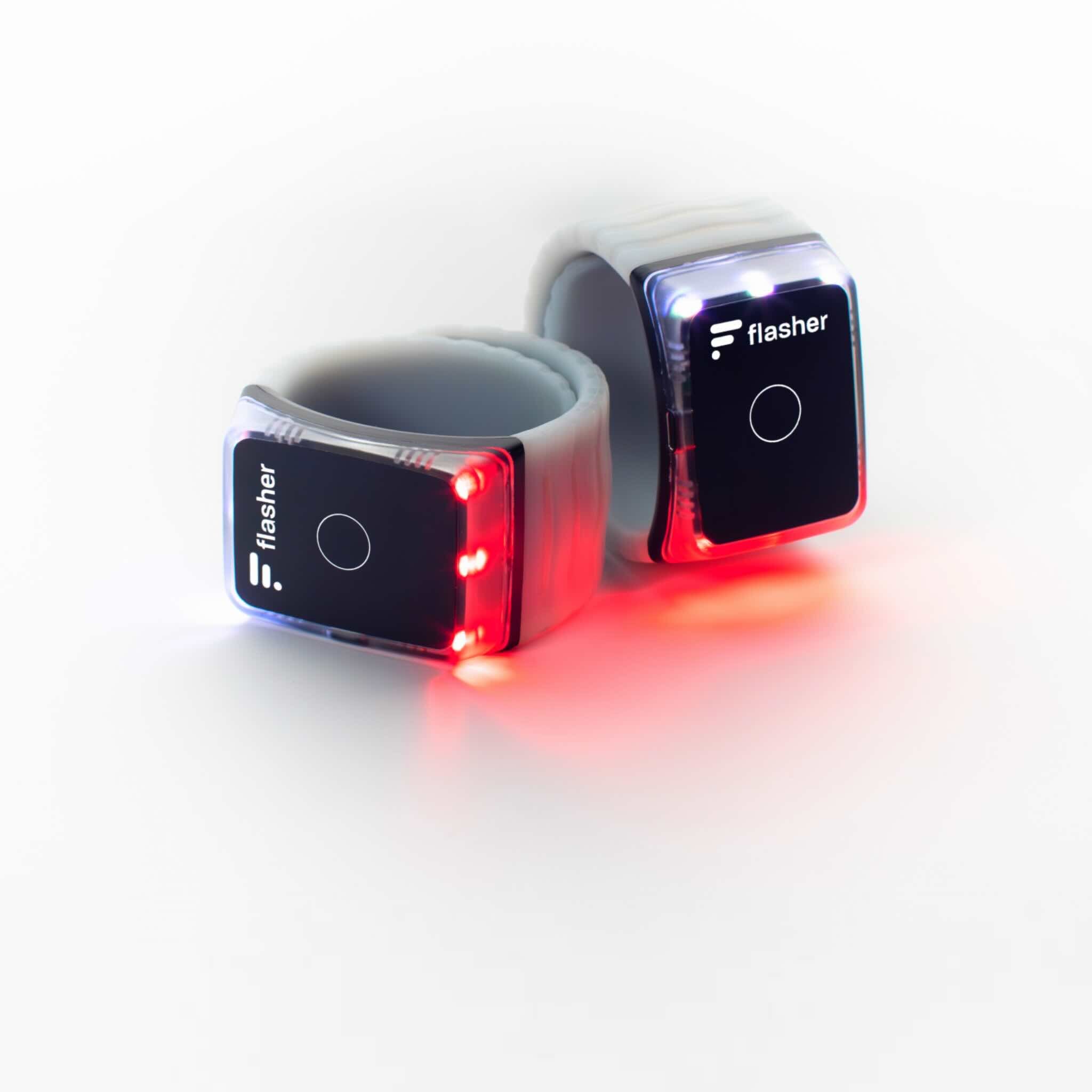
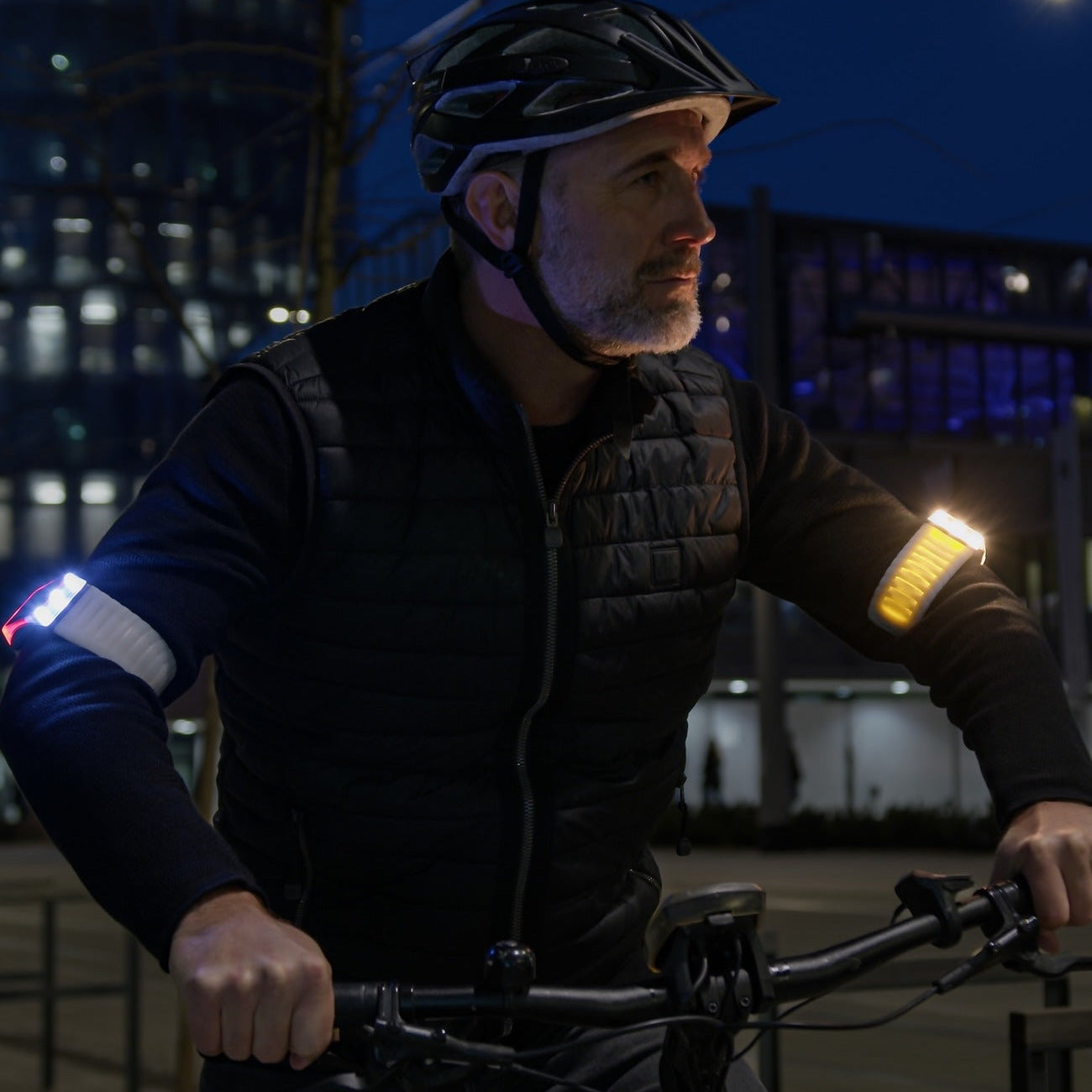
A better option would be a flasher like a flasher , positioned at the driver's eye level and at the outermost point of the body, ensuring all-around visibility and full width recognition.
Helmet requirement for e-bikes and e-scooters – fully or only partially?
The amendment also aims to introduce a helmet requirement for e-bike and e-scooter riders, allegedly to counteract the rising number of accidents. Helmets are mandatory on...
- E-bike for everyone up to the age of 14
- E-scooters for everyone up to the age of 16
- Bicycle for everyone up to the age of 12
Accident statistics show that those injured tend to be much older. The Austrian Automobile Club (ÖAMTC) is therefore calling for a general helmet requirement for e-scooters and e-bikes, although the helmet requirement for e-bikes should not be subject to any penalty. The requirement for e-scooter riders, however, apparently is. The distinction and disadvantage for e-scooters here is not entirely logical.
Helmet not mandatory in an accident
It's important to know: The amendment to the Road Traffic Regulations explicitly excludes the possibility that an e-bike or e-scooter rider can be held partially responsible for a traffic accident simply because they weren't wearing a helmet. The exact opposite – namely, automatic contributory negligence if a helmet isn't worn while riding an e-bike – was only decided by the Supreme Court in March 2025.
Many Austrians are in favor of mandatory helmet use
A survey of 1,000 people revealed that over 84% of Austrians support mandatory helmet use. However, when e-bike riders are asked directly, the figure rises to 75%, and when e-scooter riders are asked, only 60% are in favor.
What do you think about legal requirements for turn signals on scooters or helmets on e-bikes? Sensible or restrictive? Share your opinion with us on Facebook !
Stable and visible, even on e-scooters
Regardless of what the government regulates, maximum safety on bicycles and on foot already exists:
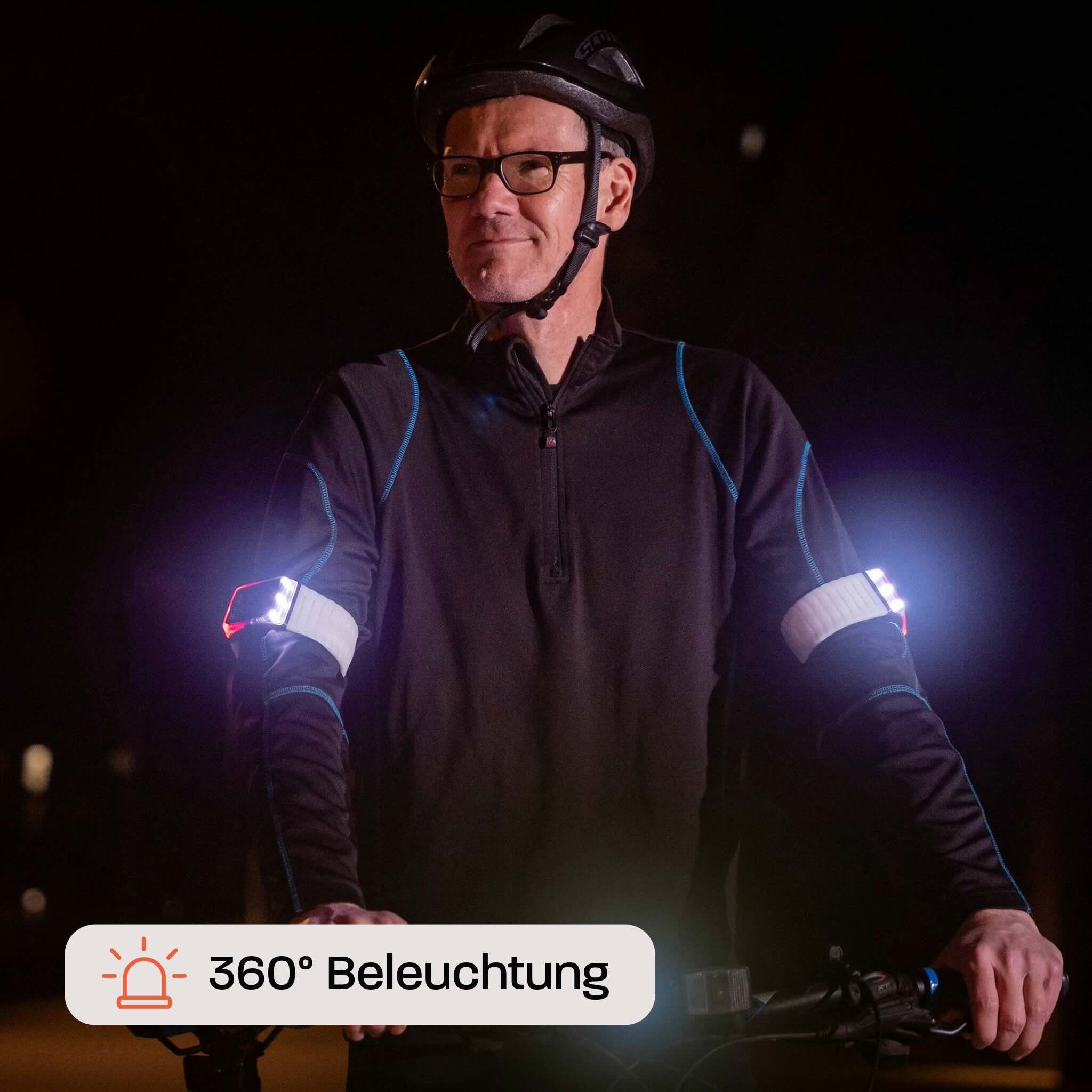
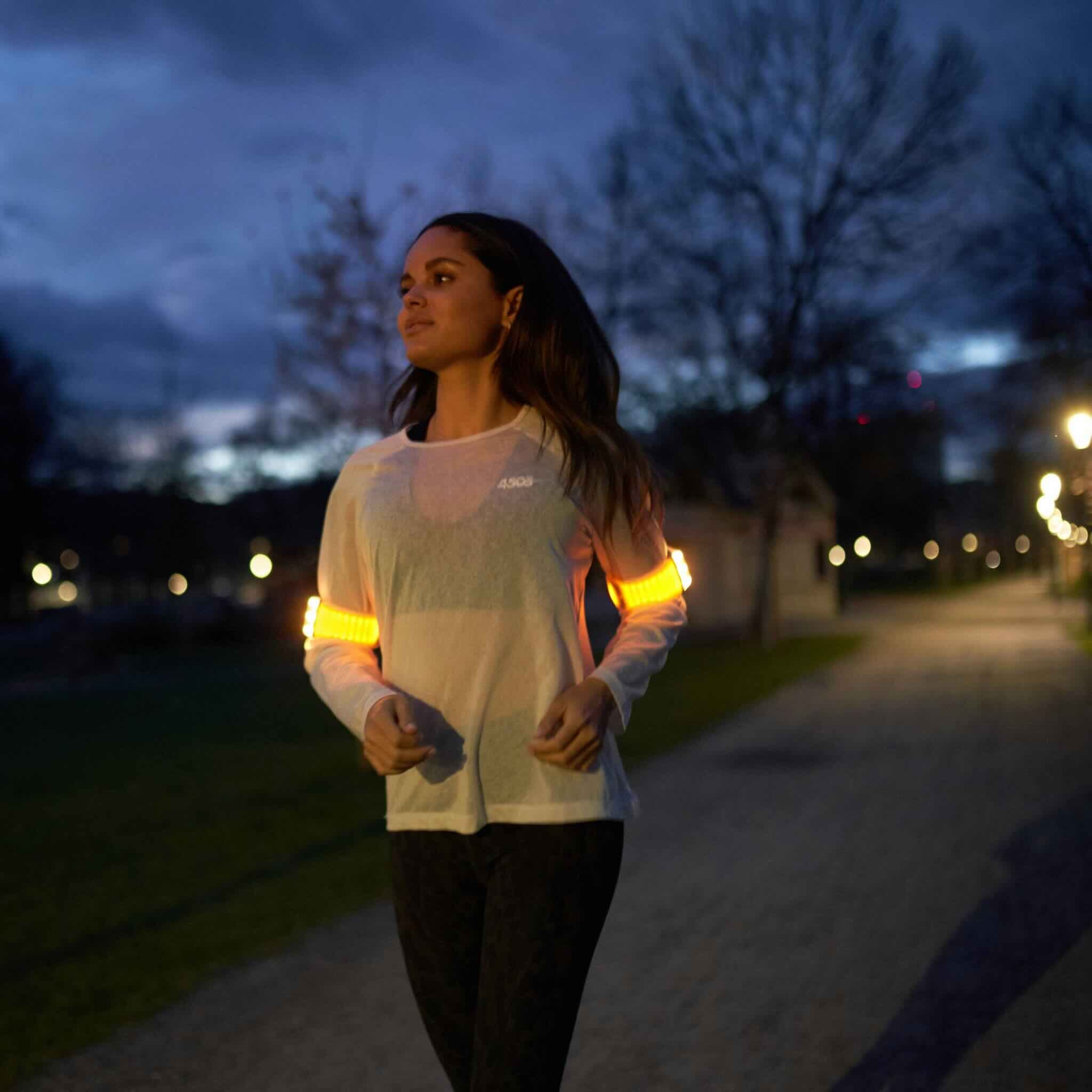
- 360° visibility through turn signals, brake lights and lighting with ultra-bright LEDs.
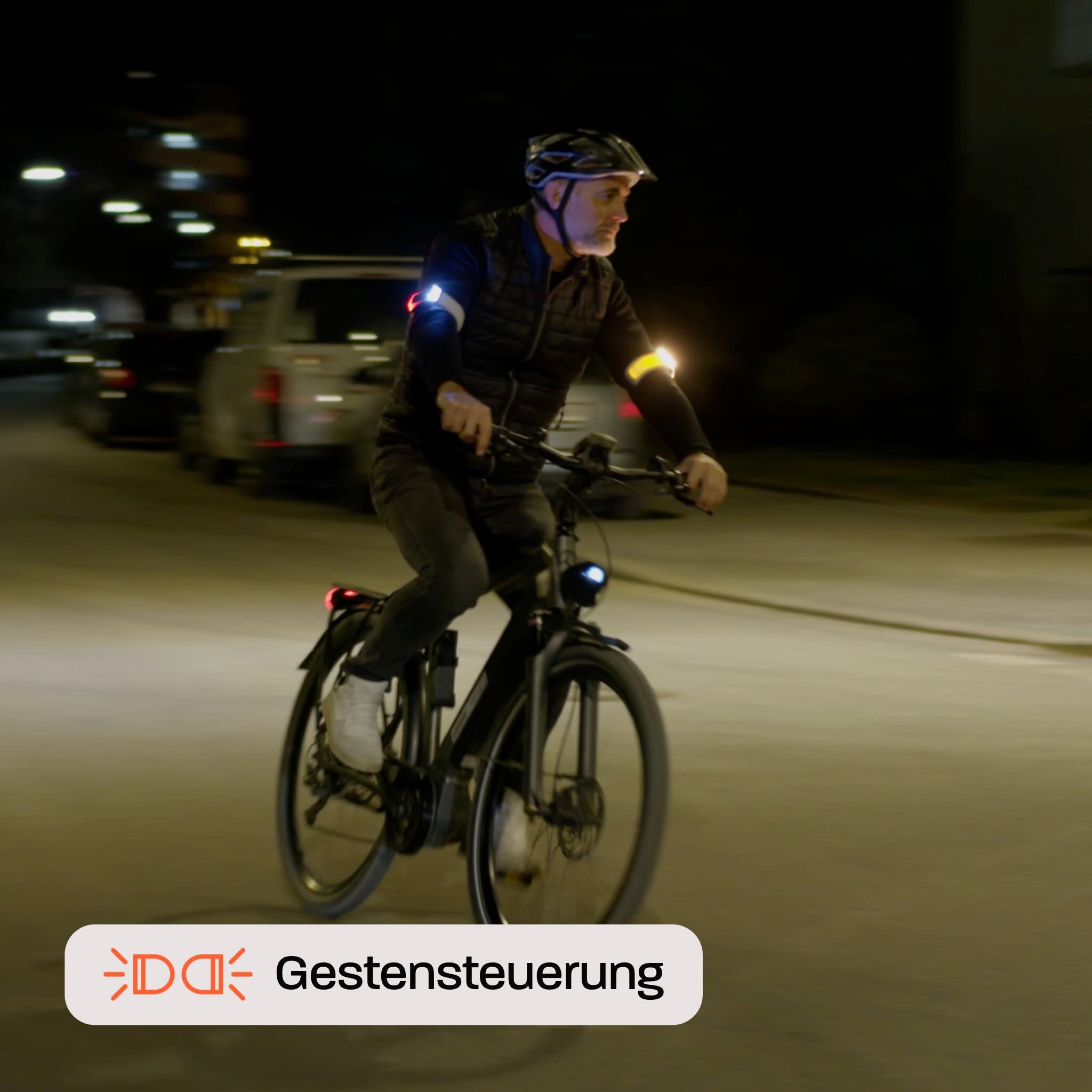
- Full stability through gesture control and sensors.
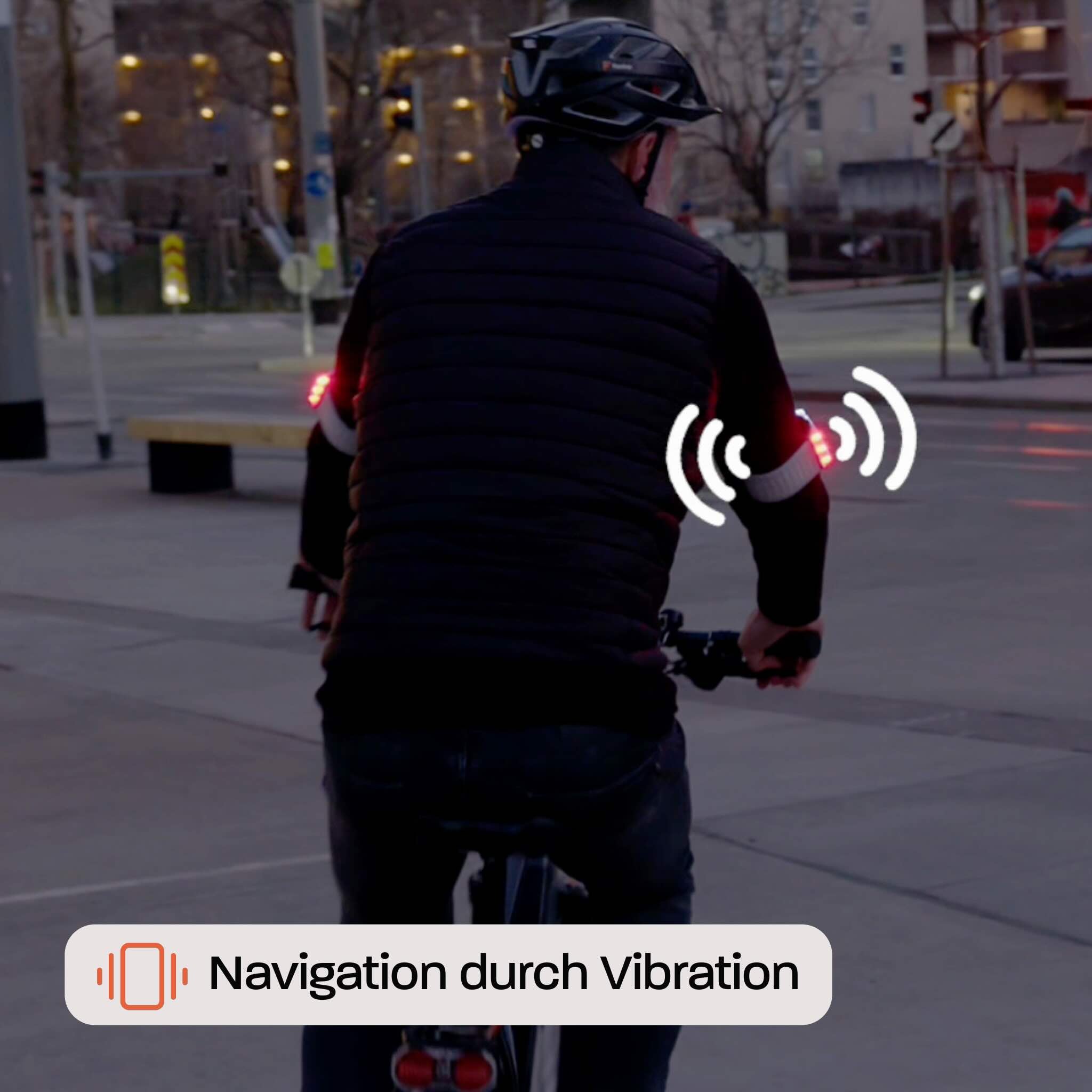
- Unique navigation through vibration in the wristbands with the free Flasher app.
- Practical. No cables, no remote control, no assembly.